Category: Parking Horror Stories

Real incidents from real truck lots — told driver-to-driver by Michael.

  • Washington Is Hunting Tired Truckers on I-5 — But Where Are We Supposed to Park?

    Washington Is Hunting Tired Truckers on I-5 — But Where Are We Supposed to Park?

    Parking Horror Stories — real news, real lessons. (Disclosure: this site earns a commission if you book through my links. It costs you nothing extra.)

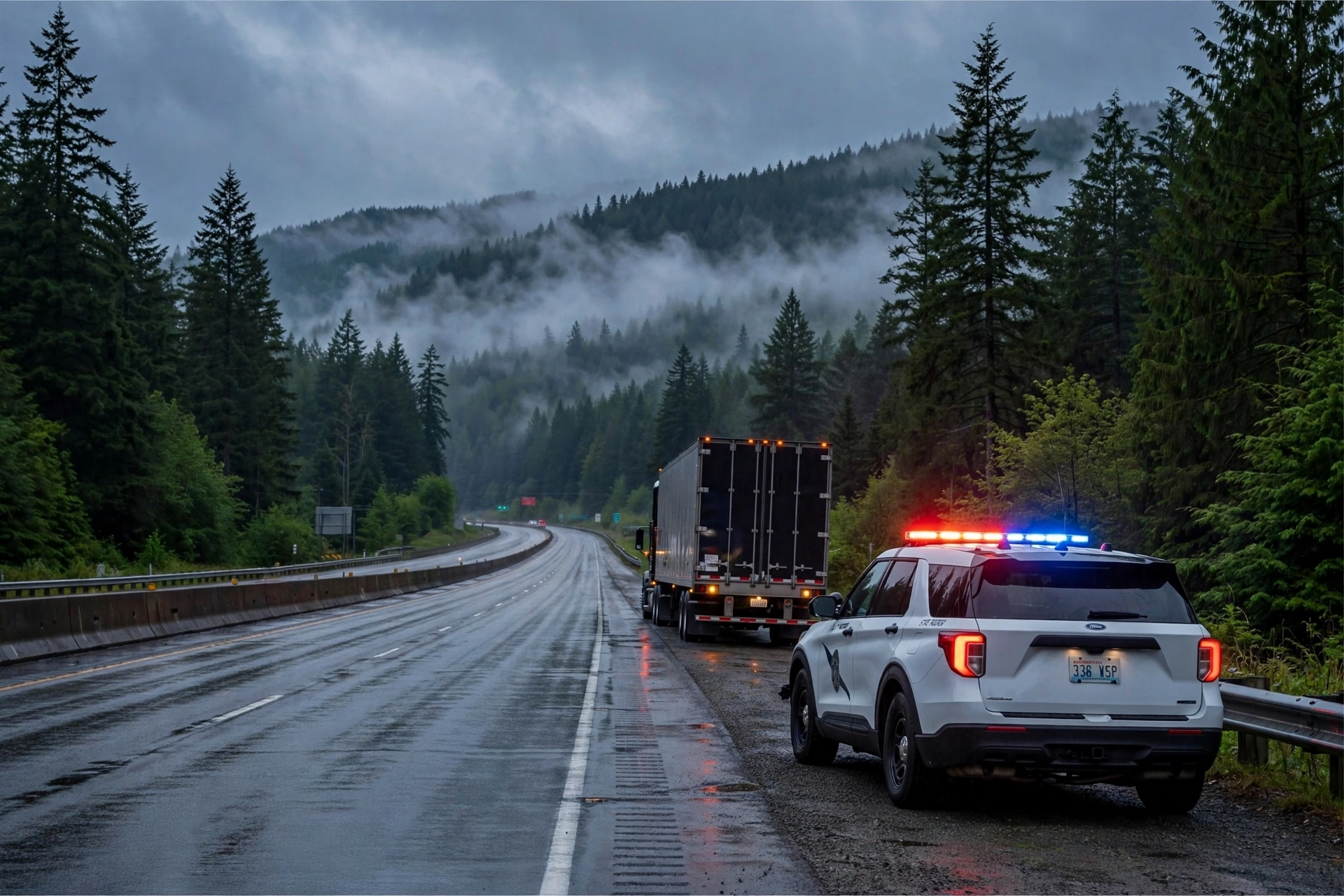
    Washington State Patrol just announced it’s putting tired truck drivers under the microscope. Their Commercial Vehicle Division is running six “fatigued driving” emphasis patrols this fall and winter on I-5 through Thurston County, between mileposts 100 and 111.

    The dates, straight from WSP’s October 1 announcement:

    • October 7 and 22
    • November 3 and 24
    • December 2 and 15

    Troopers and Commercial Vehicle Enforcement officers will be watching for signs of fatigue — and while they’re at it, they’ll be checking for moving violations and equipment problems too. WSP says the goal is to “bring greater awareness to the dangers of fatigued driving” and get drivers to make safe decisions before fatigue wrecks their reaction time.

    Nobody’s arguing with that goal. Fatigue is one of the top contributing factors in commercial vehicle crashes. Every driver out here has felt that 2 a.m. eyelid-heavy pull. Nobody wants to share the road with a driver who’s falling asleep at the wheel — least of all other truckers.

    Here’s the Part Nobody Wants to Say Out Loud

    You can tell drivers to get more rest all day long. But when the clock is running out and every lot is full, the rest area is closed, and the next legal spot is 40 miles past your hours — what exactly is the driver supposed to do?

    This is the math nobody in Olympia wants to do:

    • There’s roughly one safe truck parking space for every 11 trucks on the road.
    • Drivers burn an average of 56 minutes a day hunting for legal parking.
    • After 8 or 9 p.m., on most major corridors, there is simply nowhere left.

    So the state is spending money to catch tired drivers on an 11-mile stretch of I-5, while the parking shortage that creates tired drivers keeps getting worse. Enforcement without parking is just a trap with better lighting.

    The Question Every Driver Is Already Asking

    Should states put as much effort into creating places for tired drivers to park as they do punishing them for being tired?

    Until the answer is yes, the move is ours. If you run I-5 through Washington this fall and winter, mark those six dates — and more importantly, decide where you’re stopping before you start driving. Not at hour 9 of your 11. Before you roll.

    A reserved spot is the cheapest insurance in trucking. I book mine on Truck Parking Club — real reserved spots, no circling the lot at midnight hoping somebody leaves.

    trucknthings = $20 off Truck Parking Club, one-time use per member, works for new and returning members.

    Source: Washington State Patrol — Commercial Vehicle Division to Conduct Fatigued Driving Emphasis Patrols in Thurston County (October 1, 2026).
  • Two Trucks Hit on the I-95 Shoulder in One Night — The Parking Shortage Is Killing People

    Two Trucks Hit on the I-95 Shoulder in One Night — The Parking Shortage Is Killing People

    Two Trucks Hit on the I-95 Shoulder in One Night — The Parking Shortage Is Killing People

    Parking Horror Stories — real incidents, real lessons.

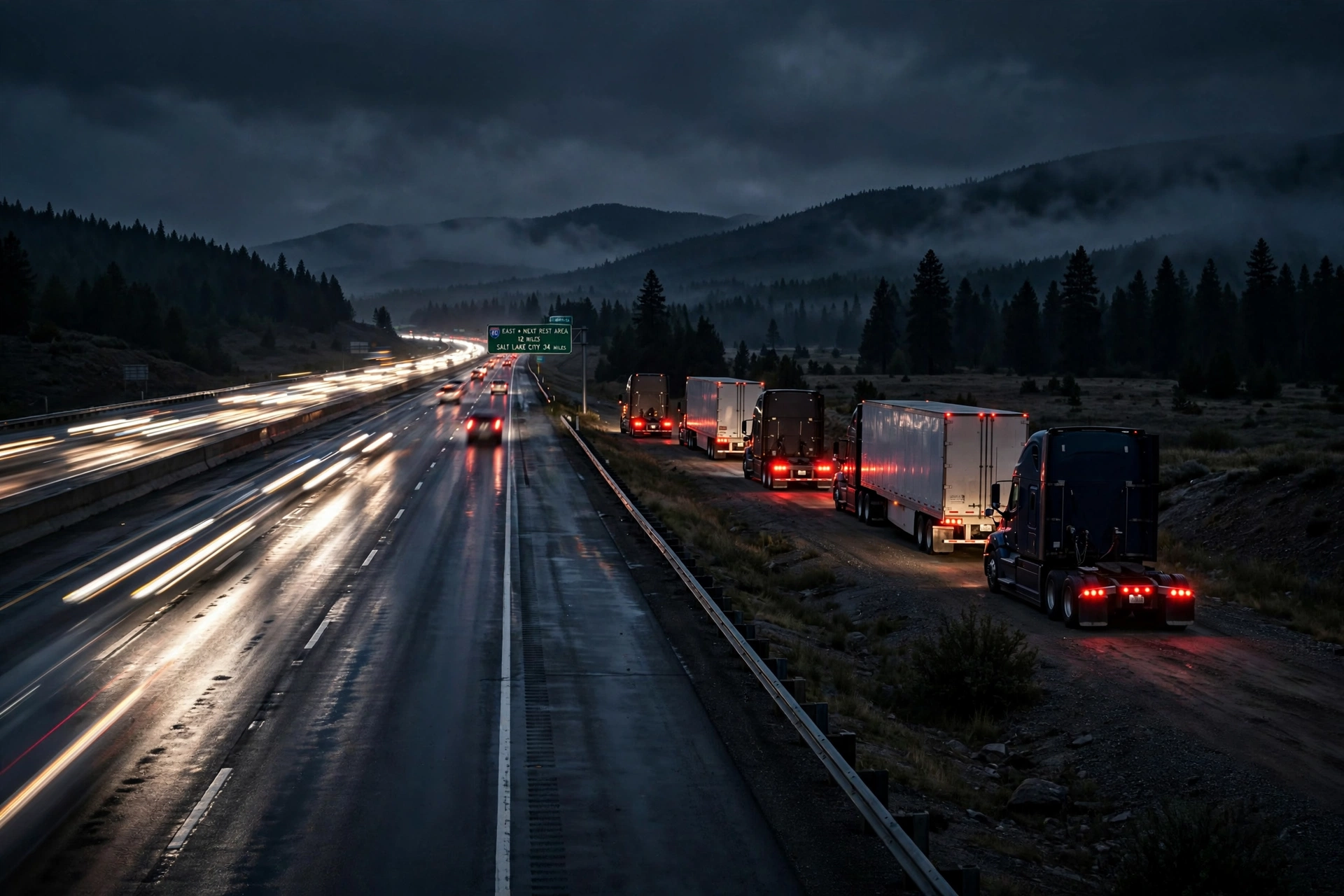
    On the night of October 4, a driver pulled her tractor-trailer onto the right shoulder of I-95 in McIntosh County, Georgia, just for a restroom break. She was climbing back into the cab when another truck slammed into the back of her rig at mile marker 47. The impact flipped the moving truck onto its side. Her truck was hauling isopropyl alcohol. Diesel spilled across the highway. She was injured and taken to the hospital in Brunswick. I-95 southbound shut down until 8:15 the next morning.

    Seven hours later, while a trooper was still dealing with that mess, a sedan drifted onto the shoulder at mile marker 52 and hit the back of another parked tractor-trailer. The car’s driver was killed on the spot.

    Two crashes. Same stretch of highway. Same cause: trucks parked on the shoulder because there was nowhere else to go.

    This Isn’t Bad Luck. It’s Math.

    There is roughly one safe truck parking space for every 11 trucks on the road, according to OOIDA. Drivers burn an average of 56 minutes a day hunting for legal parking — that’s about $7,200 a year in lost pay, per ATRI research. And I-95 through Georgia is the most congested freight corridor in the country with almost no legal parking after 8 or 9 p.m.

    A driver who runs that stretch regularly put it plainly: after dark, there’s nowhere to stop, and “when you stop, you almost die. Mentally, you know?”

    He’s right. And here’s the part nobody wants to say out loud: we keep making the same gamble. Running the clock to zero hoping a spot opens up. Pulling onto a shoulder or a ramp “just for a minute.” Every driver reading this has done it. I’ve done it. But shoulders are where people die — the woman in Georgia was parked for a bathroom break and nearly lost her life, and a sedan driver who had nothing to do with trucking lost his.

    Drivers: Plan the Stop Before the Clock Runs Out

    Nobody’s coming to save us on this one, so the first move is ours. That means:

    • Decide where you’re stopping before you start driving. Not at hour 9 of your 11. Before you roll.
    • Reserve the spot. We reserve hotels, we reserve loads — a $15–30 reserved parking spot is the cheapest insurance in trucking.
    • Stop early rather than late. The spot you skip at 6 p.m. won’t be there at 10 p.m.

    Companies: This Is Your Problem Too

    Now the part for the carriers and dispatchers. You plan our fuel stops, our routes, our appointment times — but parking is somehow “the driver’s problem”? A driver out of hours with nowhere legal to park is a company liability rolling down the interstate at 65 mph looking for a shoulder.

    If you’re running trucks, reserved parking should be built into trip planning the same way fuel is. Pay for the spot. It’s $15–30 a night against a wrecked tractor, a hazmat spill, a closed interstate, and a dead motorist. The math isn’t hard.

    The industry is already moving this way — 93 of the top 100 U.S. fleets now use Truck Parking Club for their drivers. Parking is becoming a driver perk, like decent home time. Fleets that figure this out will keep drivers. Fleets that don’t will keep reading stories like this one.

    The Tool That Exists Right Now

    Truck Parking Club has 7,000+ reservable locations across all 50 states — warehouses, terminals, repair shops, private lots — bookable from the app before you ever turn the key. No more rolling the dice on a full truck stop at 1 a.m.

    If you haven’t tried it, use my code trucknthings for $20 off your booking. (That’s my affiliate code — it supports what I do here, and it saves you real money. Win-win.)

    The Bottom Line

    Two crashes in seven hours on the same Georgia highway. One dead, one injured, both directions of I-95 shut down. A woman parked for a bathroom break. A sedan driver who never saw it coming.

    The parking shortage didn’t cause these crashes the way a blown tire causes a crash. It caused them the way a loaded gun causes a shooting — it put everyone in a position where the slightest mistake turns fatal.

    Plan your stop. Reserve the spot. And companies — stop treating parking like it’s not your bill to pay.

    Sources: Incident details via American Truck Drivers / local Georgia media reporting (Oct 2026); ATRI parking research; OOIDA statements. TPC location count per Truck Parking Club, October 2026.

  • They Robbed Sleeping Drivers: The $1.5M Philly Cargo Theft Ring

    Disclosure: I’m a Truck Parking Club partner — I earn a commission when you book with my code, at no extra cost to you.

    This one’s not like the others. Nobody got towed and nobody got a ticket. A driver got hurt.

    Haneef Palmer, 33, of Philadelphia, was sentenced to 121 months — about ten years — in federal prison, plus three years of supervised release and $1,080,786.44 in restitution. That was per a September 10 news release from the U.S. Attorney’s Office for the Eastern District of Pennsylvania. He pleaded guilty in March 2026 to conspiracy, Hobbs Act robbery — that’s robbery interfering with interstate commerce — and multiple theft counts.

    Between January 1, 2023 and July 31, 2023, Palmer and his co-conspirators stole about $1.5 million in interstate shipments from tractor trailers around Philadelphia. Crab legs. Televisions. And $230,000 worth of dimes. More than ten victims were identified.

    They targeted trucks while the driver was asleep or the truck was unattended, breaking in with bolt cutters and selling the goods locally. And during an April 1, 2023 robbery of commercial refrigerators, they “attacked and injured the driver,” officials said.

    A driver got hurt sleeping in his truck because of where he parked. The case was investigated by the FBI and Philadelphia Police.

    I’m not going to romanticize the thieves. This is why WHERE you park matters as much as finding a spot. A dark unattended corner is not a parking plan. A secured, reserved lot where your truck is expected — that’s a parking plan.

    The code is trucknthings — $20 off, one-time use, works for new and returning members.

    Don’t let this be you. Book a reserved Truck Parking Club spot tonight — code trucknthings takes $20 off.

    Source: CDLLife

  • Ticketed for Sleeping: The Town Fining Truckers $150 a Night

    Disclosure: I’m a Truck Parking Club partner — I earn a commission when you book with my code, at no extra cost to you.

    A town in Indiana used to knock on cab doors and ask truckers parked on interstate ramp shoulders to move along. Now they just ticket them.

    Greenwood, Indiana. Enforcement is focused on the Main Street and Worthsville Road exits off I-65. The town has an ordinance prohibiting vehicles from parking on or near interstate ramps. The fine is $150.

    Greenwood Police Officer Jason Grable said it plain: “If you travel at night or early in the morning, it’s everywhere. You see it everywhere.” And he gave drivers a fair warning: “As of tomorrow morning, citations will be issued, and it’s going to be hitting their pocketbooks.”

    Here’s the part that gets me. Some estimates say there’s only one legal truck parking spot for every 11 rigs on the road in a given day. One spot for every 11 trucks. Indiana added 225 rest-area spaces statewide and announced plans for 1,122 more — nearly doubling its 1,402 spots — but not necessarily anywhere near Greenwood.

    Tiffany Wlazlowski Neuman of the National Association of Truck Stop Operators knows how this goes: “When a local community does not want truck parking, they will fight it tooth and nail.” And OOIDA’s Bryce Mongeon summed up the politics in one sentence: truck parking has no opposition on Capitol Hill, but it can’t get to the top of lawmakers’ priority lists.

    So here’s the impossible bind every driver knows. Your clock runs out. There’s no legal spot for miles. You sleep on a ramp and eat a $150 ticket, or you keep driving tired and hope for the best. That’s not a choice. That’s a trap.

    A reserved spot booked before your clock dies means you never have to make that choice.

    The code is trucknthings — $20 off, one-time use, works for new and returning members.

    Don’t let this be you. Book a reserved Truck Parking Club spot tonight — code trucknthings takes $20 off.

    Source: The Trucker’s Report

  • 30 Minutes Late Cost This Driver $9,000 (Parking Horror Story)

    Disclosure: I’m a Truck Parking Club partner — I earn a commission when you book with my code, at no extra cost to you.

    Thirty minutes. That’s all it took to turn a parking spot into a $9,000 nightmare.

    This is the first story in my Parking Horror Stories series. Real incidents, real lots, real drivers — told driver-to-driver. And every one of these stories ends the same way: with a driver wishing he’d had a spot that was actually his.

    According to Land Line Media, a driver at the Charlotte Travel Plaza on Sunset Road, right off I-77 in Charlotte, North Carolina, went just 30 minutes past the parking limit. The bill: $9,000. That’s $7,000 in towing and impound fees, $1,500 in gate administration, and $500 for one day of storage.

    The lot’s sign says semis must sign in inside and park in designated spots, with a 2-day max. And it spells out the fees: a $3,500 impound fee, $3,500 for vehicles over 8,000 lbs, up to a $2,500 boot fee, up to $1,500 for specialty equipment, $750 gate/admin, and $25–$250 a day in storage.

    The tow company was NMLD Towing. It happened the day after a historic snowstorm, during a state of emergency. And this wasn’t a one-off — other drivers posted warnings about the same plaza back in April 2025, with bills topping $10,000.

    Here’s what I know. I’ve seen lots like this. You roll in dead tired, the sign’s in fine print, and the clock is working against you from the second you shut the engine off. When your spot isn’t truly yours, you’re at their mercy.

    A reserved, prepaid spot changes the math. Nobody can hook your truck for being 30 minutes late. You paid for it. It’s yours. Sleep the whole break if you need to.

    The code is trucknthings — $20 off, one-time use, and it works for new and returning members.

    Don’t let this be you. Book a reserved Truck Parking Club spot tonight — code trucknthings takes $20 off.